
Coconut oil for dogs is widely discussed for its potential role in supporting skin and coat health. Derived from coconuts, coconut oil contains medium-chain fatty acids that interact with the outer layers of the skin. When applied or used properly, coconut oil may help improve dryness, texture, and coat condition. While coconut oil is easy to find and simple to use, understanding its proper role helps pet owners set realistic expectations.
Acton Animal Hospital frequently answers questions about coconut oil for dogs and how it fits into a balanced care routine. This guide explains how coconut oil may help, when to use caution, and how to approach it in a safe, informed way. If you would like personalized guidance, call (978) 263-7477 or book an appointment online.
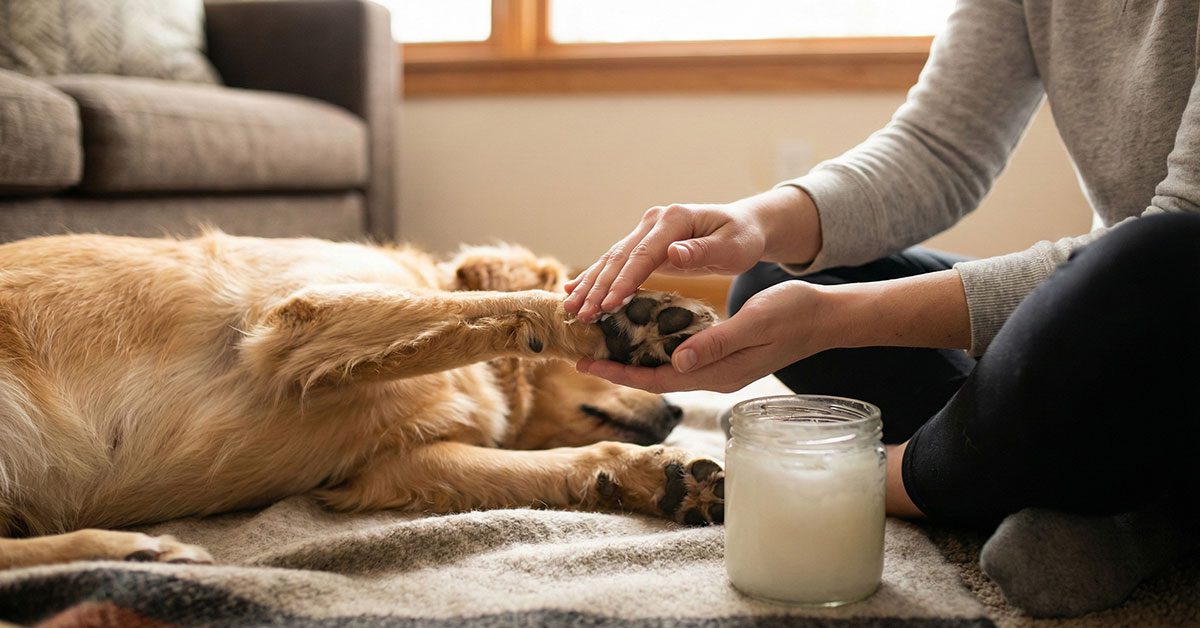
Coconut Oil for Dogs Skin
Coconut oil for a dog’s skin concerns most often relates to dryness, flaking, and dull coats. The fatty acids in coconut oil can help moisturize the outer layers of the skin and reduce surface dryness when applied correctly. This may lead to a softer coat and a more comfortable feel for some dogs. Coconut oil also creates a light barrier that can help protect skin from environmental dryness.
Topical use works best on small, localized areas rather than full‑body application. Dogs with seasonal dryness, mild irritation, or rough patches on elbows and paws may benefit the most. Pet owners should always start with a very small amount to observe how the skin responds. Coconut oil should support skin comfort, not replace professional evaluation for persistent or worsening problems.
Before applying coconut oil, gently clean the area and allow it to dry. Massage a thin layer into the skin so it absorbs instead of sitting on the surface. This approach reduces greasiness and prevents dirt from sticking to the coat. Regular brushing afterward helps distribute any remaining oil evenly.
Common Skin Areas Where Coconut Oil May Help
Coconut oil for dogs often works best on specific spots rather than the entire body. Examples include:
- Dry paw pads
- Elbows with calluses
- Small flaky patches
- Dull coat areas near the shoulders or hips
Using coconut oil in these targeted areas keeps the application manageable and helps owners track results more easily.
Is Coconut Oil Safe for Dogs?
Many owners ask if coconut oil is safe for dogs when used regularly. In general, coconut oil is considered safe for dogs in moderate amounts, but safety always depends on how and how much it is used. Coconut oil is high in fat, which means excessive use may contribute to digestive upset or unwanted weight changes. Moderation plays a key role in keeping coconut oil for dogs both safe and beneficial.
Topical use usually presents fewer concerns than oral use, especially when owners apply a thin layer. Dogs may try to lick coconut oil from their skin, which adds to their overall intake. For that reason, owners should supervise after application and limit the amount used. Coconut oil should complement a balanced diet, not become a major part of it.
Dogs with certain health conditions may need additional caution. Weight management issues, sensitive stomachs, or existing skin infections may change how coconut oil affects the body. This is why individualized guidance from a veterinary team remains valuable before adding coconut oil to a routine.
Is Coconut Oil Good for Dogs?
The answer to this question depends on the goal and how coconut oil is used. Coconut oil can support coat shine, mild skin dryness, and overall appearance when used carefully. Many owners notice improved softness in the coat and less visible flaking after consistent, limited use. Coconut oil for dogs may also help reduce surface dryness caused by indoor heating or cold weather.
Coconut oil contains lauric acid, a fatty acid often associated with skin barrier support. This can help the skin retain moisture and feel less tight. Coconut oil also provides a smooth texture that can make brushing easier for some coat types. These small improvements often add up to better daily comfort for the dog.
However, coconut oil should never be viewed as a cure‑all. Chronic itching, redness, hair loss, or odor require professional evaluation. Coconut oil works best as a supportive option within a broader care plan guided by veterinary insight.
Situations Where Coconut Oil May Be Helpful
Coconut oil may provide added support in these situations:
- Seasonal dry skin
- Dull or brittle coats
- Mild surface irritation
- Dry paw pads in winter
Each dog responds differently, so observing changes over time helps determine whether coconut oil provides meaningful benefits.
Coconut Oil and Coat Appearance
A healthy coat often reflects healthy skin. Coconut oil can improve a dog’s coat texture by smoothing the hair shaft and adding light moisture. This may reduce breakage and help fur lie flatter, which improves overall appearance. Dogs with medium or long coats often show the most visible difference.
Applying coconut oil before brushing allows the brush to glide more smoothly through the coat. This can reduce tugging and make grooming more comfortable. Only a small amount is necessary to avoid a greasy look. Owners often find that less coconut oil produces better results.
Coconut oil should never replace routine grooming, bathing, and proper nutrition. Instead, it works best as a finishing touch that supports the work already done through good daily care.
Coconut Oil and Paw Care
Paw pads experience constant contact with rough surfaces, hot pavement, and cold sidewalks. Coconut oil for dogs can help keep paw pads flexible and less prone to cracking. Regular use may improve texture and comfort, especially in extreme weather seasons.
Massage a very thin layer into clean paw pads before bedtime to allow absorption overnight. This timing limits tracking on floors and furniture. Dogs often enjoy the gentle massage, which can also help owners notice early changes in pad condition.
If cracking, bleeding, or swelling develops, coconut oil alone may not be enough. Those signs should prompt professional evaluation to rule out infection or injury.
Coconut Oil and Shedding
Some dog owners use coconut oil in hopes of reducing shedding. While coconut oil does not stop shedding completely, healthier skin and coat may lead to less breakage and fewer loose hairs. Improved moisture balance can make the coat stronger and more resilient.
Coconut oil may also make brushing sessions more effective. When loose hair releases more easily, it leaves less fur on furniture and clothing. Combined with regular grooming, coconut oil can support a cleaner home and a more comfortable dog.
Coconut Oil and Odor Control
Coconut oil has a naturally mild scent that many owners find pleasant. When applied lightly, coconut oil for dogs may help neutralize mild coat odors between baths. It does not replace proper bathing schedules, but it can improve freshness in everyday settings.
Dogs with strong or persistent odors should receive veterinary evaluation. Odor often signals underlying skin or ear issues that require professional attention.
How to Introduce Coconut Oil for Dogs
Introducing coconut oil for dogs should always start slowly. Begin with a tiny amount and observe how your dog’s skin and digestion respond. Increase only if the dog tolerates it well and shows positive changes. Consistency matters more than quantity.
Owners should also choose high‑quality, plain coconut oil without additives. Store it properly to maintain freshness and texture. Clean hands and tools during application reduce the risk of introducing bacteria to the skin.
When Coconut Oil May Not Be the Best Choice
Coconut oil for dogs does not suit every situation. Dogs with active infections, open wounds, or severe skin disease need professional treatment rather than surface support. Coconut oil may also feel too heavy for dogs with naturally oily skin.
If coconut oil causes increased itching, redness, or digestive upset, discontinue use and contact Acton Animal Hospital for guidance. Every dog deserves a care plan based on their individual needs, not general trends.
Partnering With Acton Animal Hospital
At Acton Animal Hospital in Acton, MA, the team helps pet owners make informed decisions about everyday wellness options, including coconut oil for dogs. The goal always centers on safe, balanced care that supports long‑term comfort and health. Coconut oil can be part of that conversation when used thoughtfully.
If you have questions about coconut oil or your dog’s skin and coat health, call (978) 263-7477 to speak with the team or book an appointment online. Together, you can build a care approach that fits your dog’s lifestyle and individual needs.


Recent Posts
About Us
Our veterinarians in Acton, MA bring over 80 years of combined experience and a multitude of services for your pet.