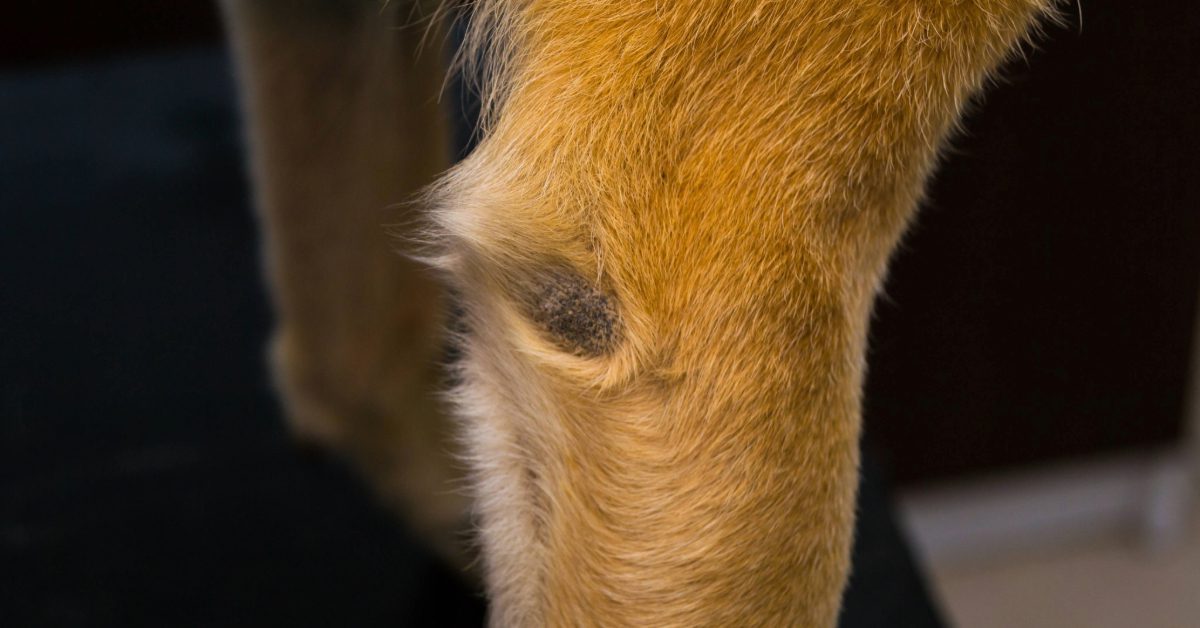
A dog elbow callus is exactly what it sounds like: a thickened, roughened patch of skin that forms over the bony point of your dog’s elbow. If you’ve noticed your dog has developed what looks like a rough, gray, or hairless patch on one or both elbows, you’re not alone. Dog elbow calluses are incredibly common, especially in large and giant breeds. So what causes them, when are they harmless, and when do they become a problem? Read on to get a complete picture of what you need to know about your dog’s elbow calluses.
What Is a Dog Elbow Callus?
A dog elbow callus forms as a natural response to repeated pressure and friction on the skin covering the elbow joint. When a dog lies down on hard surfaces repeatedly, the skin over the bony prominence of the elbow thickens to protect the underlying tissue. This protective thickening is the callus itself.
Elbow calluses in dogs are typically gray, dry, rough to the touch, and hairless. They’re usually not painful in their early stages and may look worse than they actually are. Many pet owners are alarmed the first time they notice one, but a simple, uncomplicated elbow callus is a cosmetic issue rather than a medical emergency.
What Does a Dog Elbow Callus Look Like?
In their mildest form, elbow calluses in dogs appear as small, flat, leathery patches of skin with little to no hair. As they develop over time, they can grow larger, thicker, and more rough in texture. The skin may look cracked or flaky, and the callus may be darker in color than the surrounding skin. In more advanced cases or when complications arise, the callus can become swollen, oozing, or infected.
What Causes Dog Elbow Calluses?
The root cause of an elbow callus in dogs is simple: pressure. Every time your dog lies down on a hard floor, the elbow takes the brunt of their body weight. Over time, the skin adapts by thickening. However, several factors influence how quickly and severely a dog elbow callus develops.
Breed and Body Weight
Large and giant dog breeds are by far the most affected by elbow calluses. Dogs like Great Danes, Mastiffs, German Shepherds, Labrador Retrievers, and similar heavyset breeds carry significant body weight and spend more time lying down, creating more pressure on the elbow joints. Smaller dogs can develop elbow calluses too, but it’s far less common.
Sleeping and Resting Surfaces
The surface a dog rests on plays a significant role in callus formation. Dogs that sleep primarily on hard floors, concrete, tile, or hardwood are more prone to developing dog elbow calluses than those with access to soft bedding. Providing appropriate, supportive sleeping surfaces is one of the most effective ways to slow callus progression, and your vet at Acton Animal Hospital can advise you on the best options for your dog’s size and needs.
Age
Older dogs tend to develop more pronounced elbow calluses than younger dogs. This happens for a few reasons: they’ve spent more time lying down over the course of their lives, their skin becomes less elastic with age, and older dogs may sleep more overall. Age-related changes in skin health can also make calluses more likely to crack and become problematic.
When Does a Dog Elbow Callus Become a Problem?
A simple elbow callus, while not aesthetically pleasing, is not typically harmful. However, there are situations where a dog elbow callus can develop complications that require veterinary attention.
Watch for the following signs that a callus has become more than just a cosmetic concern:
- Swelling beneath the callus: A fluid-filled swelling called a hygroma can develop under the callus, creating a soft, fluctuant lump at the elbow. Hygromas require veterinary evaluation.
- Bleeding or open sores: Cracked calluses can bleed or develop open wounds. These are entry points for bacteria and infection.
- Discharge or odor: Oozing, pus, or a foul smell coming from a callus area indicates infection and needs prompt veterinary care.
- Redness and warmth: Inflammation around the callus may indicate an infected callus or underlying hygroma.
- Your dog licking or chewing at the area: This behavior suggests the callus has become uncomfortable or painful and should be evaluated by your vet.
If you notice any of these signs on your dog’s elbow callus, schedule an appointment at Acton Animal Hospital in Acton, MA. Leaving an infected callus or hygroma untreated can lead to serious complications, including deep tissue infection.
What Is a Canine Elbow Hygroma?
A hygroma is a fluid-filled sac that develops under the skin over a pressure point, most commonly the elbow. While hygromas and elbow calluses in dogs are related, they’re not the same thing. A hygroma forms when repeated trauma to the area causes the body to wall off the injury with a fluid-filled cavity. Early hygromas are soft and may be painless, but they can become quite large and prone to infection if not addressed.
Treatment for canine elbow hygromas varies based on severity and may include drainage, bandaging, protective padding, or in more advanced cases, surgery. Your veterinarian at Acton Animal Hospital will assess the hygroma and recommend the most appropriate approach.
Can Dog Elbow Calluses Be Treated?
Treatment for a dog elbow callus depends on its severity and whether any complications are present. For mild, uncomplicated calluses, your veterinarian may recommend:
- Environmental modifications: Providing orthopedic or padded bedding to reduce pressure on the elbow joints is often the first recommendation. Many large breed dogs benefit significantly from high-quality foam or memory foam dog beds.
- Prescription moisturizing products: Some veterinarian-recommended products can help soften and condition the callus tissue, reducing cracking and discomfort. Never apply human lotions or products without your vet’s guidance.
- Elbow protection: In some cases, veterinary-grade elbow pads or sleeves can reduce ongoing trauma to the elbow area.
For infected calluses, open wounds, or hygromas, treatment becomes more involved. Your vet may prescribe antibiotics, perform wound care, recommend bandaging, or discuss surgical options for more complicated cases. Our team at Acton Animal Hospital can walk you through every step and answer all your questions about the right plan for your dog.
How Can Dog Elbow Calluses Be Prevented?
Prevention isn’t always possible, especially for large breed dogs with a genetic predisposition to callus formation. However, there are meaningful steps that can slow or reduce the severity of elbow calluses in dogs.
Proactive steps that may help include:
- Providing soft, supportive sleeping surfaces: Orthopedic dog beds, thick blankets, or foam mats can significantly reduce elbow pressure.
- Monitoring your dog’s elbows regularly: Catching changes early means addressing them before they progress to infection or hygroma formation.
- Scheduling regular wellness exams: At Acton Animal Hospital, routine check-ups give your vet the opportunity to assess your dog’s skin health and catch developing calluses before they become complicated.
A Closer Look at Your Dog’s Elbows Goes a Long Way
A dog elbow callus is something many pet owners discover by chance, but once you know what to look for, monitoring them becomes a simple part of caring for your dog. The majority of elbow calluses in dogs are manageable with the right environment and a watchful eye. But when a callus becomes inflamed, infected, or develops into a hygroma, it’s time to act. Our veterinary team at Acton Animal Hospital can help you navigate every stage, from simple callus care to more complex treatment. Give us a call at 978-263-7477 or book an appointment online, and let us take a look at those elbows.


Recent Posts
About Us
Our veterinarians in Acton, MA bring over 80 years of combined experience and a multitude of services for your pet.